
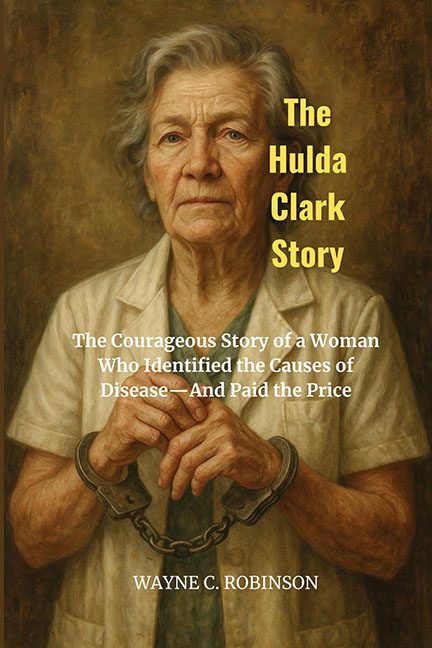
Biographies should capture the spirit of their subject — bold, intriguing, alive. The Hulda Clark Story instead delivers a cover that looks like it was commissioned for the county courthouse hallway and then shackled to a wall forever.
Front and center, we’ve got a dour oil painting of Hulda Clark herself, staring out with all the warmth of a DMV worker on their 12th unpaid overtime shift. Her hands are in shackles, yes, but the effect isn’t dramatic — it’s depressing. Instead of “courageous rebel who fought for truth,” we get “grandma caught shoplifting tapioca at the local Piggly Wiggly.”
The color palette doesn’t help. Muddy browns, washed-out yellows, and murky shadows combine to form a vibe best described as “funeral parlor chic.” There’s no energy, no atmosphere, just the visual weight of sadness pressing down on you like damp wallpaper.
Then the typography rolls in like a bad PowerPoint slide.
- The Hulda Clark Story is stacked in bright yellow, shoved to the side as if it’s embarrassed to be here.
- The subtitle — The Courageous Story of a Woman Who Identified the Causes of Disease — And Paid the Price — is a full paragraph crammed right onto the portrait, choking what little air the cover had left. That’s not a subtitle. That’s a dust jacket essay.
- The author’s name, meanwhile, is shoved awkwardly at the bottom like the signature on a bad courtroom sketch.
The verdict? The Hulda Clark Story could’ve been a bold, symbolic exploration of a controversial woman. Instead, the cover went with grandma’s mugshot rendered in oil paint, paired with typography that screams Microsoft Word 2003. Far from courageous, this design just feels shackled to poor choices.