
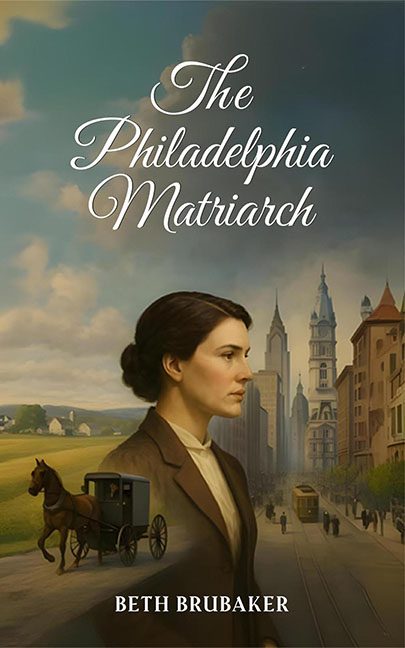
Historical fiction should feel sweeping, textured, and alive with detail. The Philadelphia Matriarch, however, feels more like an awkward AI mash-up where the algorithm couldn’t decide between Amish postcard and wax museum exhibit.
Front and center is the matriarch herself, posed stiffly in profile with all the charisma of a Madame Tussauds mannequin. Her features are polished to that uncanny valley smoothness, the kind that makes you wonder if she’s about to blink… or if she can’t, because her eyelids were never rendered properly. She’s supposed to look strong and commanding, but instead she just looks like she’s waiting for someone to dust her with furniture polish.
Behind her? Absolute chaos masquerading as “historical depth.” On the left, we’ve got horse-and-buggy farmland straight out of Amish country. On the right, Philadelphia’s trolley cars, skyscrapers, and looming city buildings. It’s not an elegant blend of rural simplicity and urban progress — it’s two different postcards smashed together in an AI generator and left to fight it out. Instead of transporting us to another era, it makes us wonder: Did the matriarch teleport? Or does she just live in a glitchy time loop?
And then there’s the title font. The Philadelphia Matriarch is presented in swirly, bridal-invitation script that whispers “rustic wedding RSVP” instead of roaring “serious historical family saga.” The whole thing has less gravitas and more Hallmark Channel presents… mildly historical feelings.
The end result? A cover that isn’t dramatic, compelling, or period-accurate — just uncanny, mismatched, and deeply unprofessional.
Verdict: The Philadelphia Matriarch isn’t a book cover. It’s a wax doll wandering lost between Amish fields and trolley tracks, trying to find its purpose… and failing.